Ah, genetic screens, the dreaded suggestion of enthusiastic advisors to their naive PhD students. The work is tedious and the results uncertain, but the payoffs of a well-designed screen are well worth the effort. As of summer 2026, I am immersed neck-deep into the phenotyping of my mutant population. With a bit of luck, I will have genes to talk about when you check back a year from now. Until then: here is the basic idea.
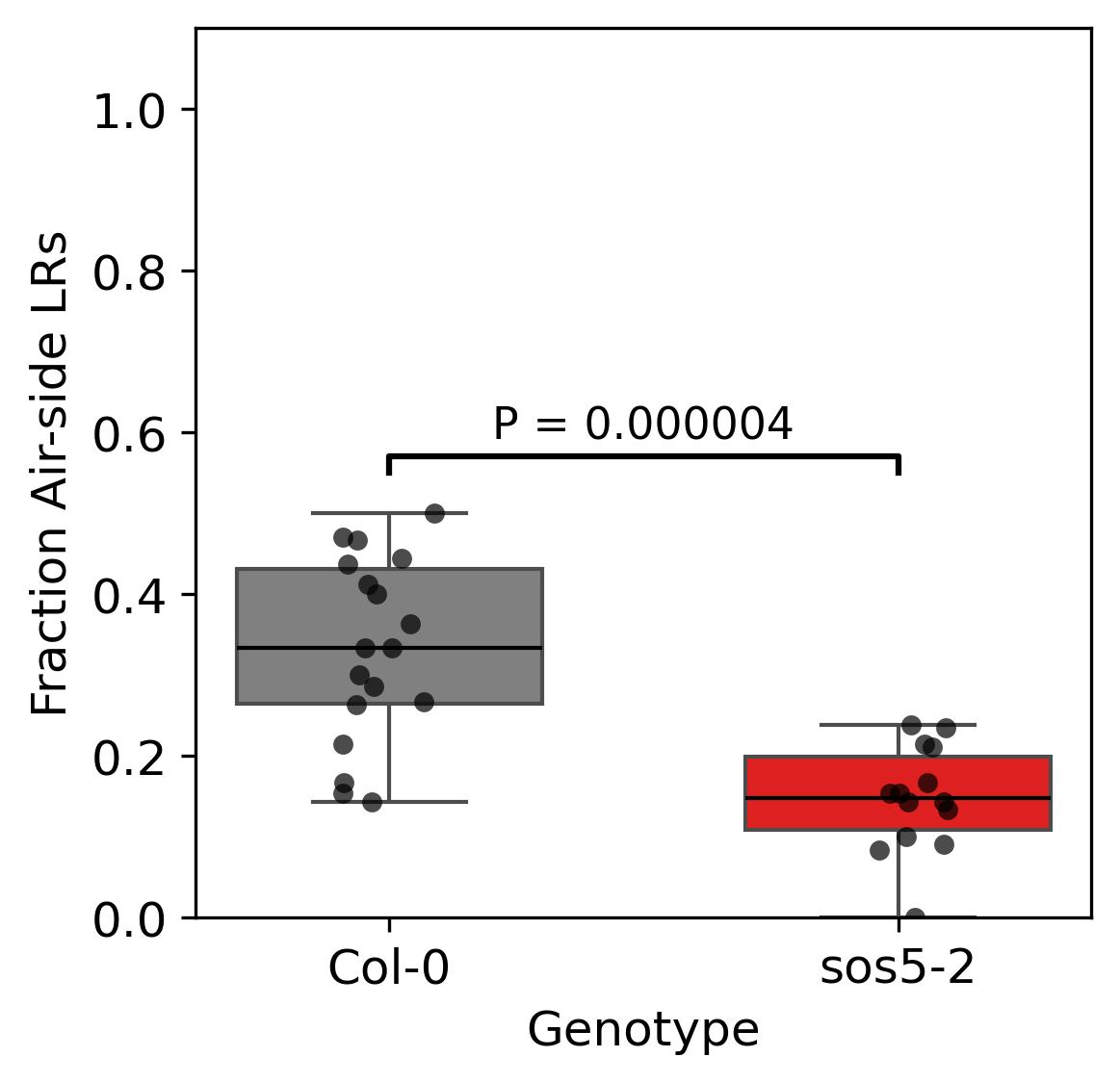
Genetic screens, and particularly random mutagenesis screens, are powerful ways to identify genetic regulators of a behavior or phenotype. As with all of my other grad school projects, the central aim is to understand how roots perceive water. In hydropatterning specifically (see Shaping with water), the SOS5/FLA4 gene was identified as a negative genetic regulator of moisture-induced branching (Scharwies et al., 2025). In knock-outs of the SOS5 gene, like in the sos5-2 line, hydropatterning is strongly and consistently strengthened. This gives us an ideal background for a suppressor screen in which to resolve the effects of subtle mutations that weaken hydropatterning.